

Every contractor in India knows the pattern. The site is running on schedule in May, and then the monsoon arrives. Trenches fill with water, haul roads turn to slush and machines get stuck. Weeks of progress can disappear in one heavy spell.
Monsoon earthmoving is not impossible, but it does need planning. This guide covers what to do before, during and after the rains so your project stays safe and close to schedule.
Why the monsoon is hard on earthmoving projects
Rain changes how soil behaves, and that affects both safety and productivity.
- Soil loses strength. Wet clay swells and becomes sticky. Saturated soil can slump, so trench walls and slopes become less stable.
- Haul roads break down. Loaded dumpers and trucks sink into soft ground. Cycle times go up and fuel use rises.
- Water collects in excavations. Standing water slows work and can undermine foundations and embankments.
- Visibility and ground conditions get worse. This raises the risk for operators and ground staff
In regions with heavy rainfall, such as the Konkan coast, Mumbai and the Western Ghats around Lonavala and Pune, these problems are even more pronounced.
Step 1: Do the heavy earthwork before the rains
Where the schedule allows, finish bulk excavation, filling and grading before the monsoon starts. Prioritise:
- Deep excavations and foundation pits
- Major cut-and-fill work
- Slope shaping and benching
- Building access roads with a stable, compacted base
A strong pre-monsoon push is usually cheaper than fighting wet ground later.
Step 2: Put drainage in place first
Water control matters more than any other monsoon measure.
- Dig temporary drains and channels around the excavation to divert surface runoff.
- Keep sumps and dewatering pumps ready at the low points of the site.
- Shape the ground so water flows away from open pits.
- Protect exposed slopes with tarpaulin, geotextile or vegetation to reduce erosion.
An excavator is very useful here, because it can quickly cut drains and clear silt as conditions change.
Step 3: Build proper haul roads
Soft ground is the main cause of lost time in the monsoon. A good haul road should have:
- A compacted sub-base with a layer of coarse aggregate or crushed stone
- A slight camber so water runs off the surface
- Side drains along both edges
- Regular maintenance, since rain washes out the surface
Skipping this step often costs more in stuck vehicles and delays than the road itself would have.
Step 4: Choose the right machine for wet conditions
Not every machine copes equally well with soft, wet ground.
- Crawler excavators spread their weight over the tracks and handle soft ground better than wheeled machines.
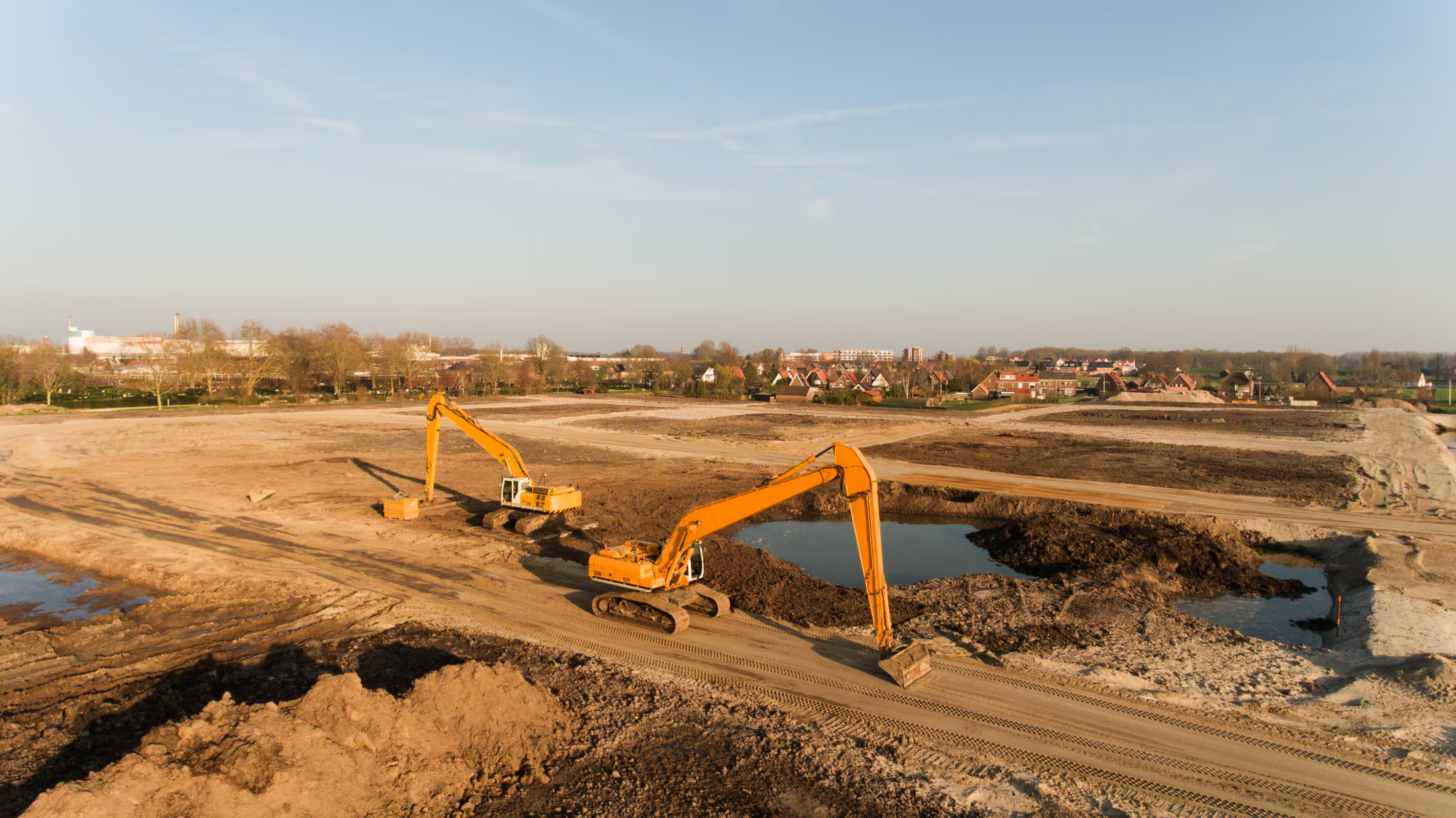
- Long boom excavators can work from firmer ground at the edge of a site, which is useful near water, creeks and canals.
- Rock breakers are useful for removing hard material from slopes and cuttings without needing blasting in unstable conditions.
- Wider tracks or timber mats can improve flotation on very soft ground.
Matching the machine to the ground prevents breakdowns and keeps work moving. If your project is short or seasonal, renting is often more practical than owning. You pay only for the period you need, and the rental provider handles maintenance.
Step 5: Protect people and equipment
Safety needs extra attention in wet weather.
- Inspect trench walls and slopes after every heavy rain, and before work resumes.
- Stop work when ground conditions are unsafe.
- Keep access routes marked and lit, especially in low visibility.
- Check machine hydraulics, electrical connections, filters and tracks more often.
- Park equipment on firm, high ground, away from drainage paths and flood-prone corners.
Only trained operators should work in monsoon conditions, and site supervisors should have clear authority to halt work when it is not safe.
Step 6: Plan the schedule with buffer time
Even well-prepared sites lose working days to rain. Build realistic buffers into the schedule instead of assuming normal productivity. It also helps to:
- Keep a list of tasks that can continue in wet weather, so crews are never idle
- Book equipment early for the post-monsoon rush, when demand rises sharply
- Track the weather forecast and adjust the daily plan accordingly
Step 7: Recovery after heavy rain
Once the rain eases, the first priority is restoring the site:
- Pump out water from excavations.
- Clear silt from drains and channels.
- Repair haul roads and re-compact softened sections.
- Re-check slopes and embankments for cracks or movement.
- Resume work only when the ground has been judged safe.
Common monsoon mistakes to avoid
- Leaving excavations open and unprotected
- Starting drainage work only after flooding has begun
- Using unsuitable machines on soft ground
- Overloading trucks on wet roads
- Ignoring early signs of slope movement
Working with an experienced earthmoving partner
Monsoon projects reward experience. An earthmoving contractor with a well-maintained fleet and skilled operators can handle site drainage, excavation, grading and slope work with far fewer surprises. Kasturi Earthmovers provides excavators on rent, long boom excavators, rock breaker machines and earthmoving services in Mumbai, Pune and other cities across India, for infrastructure, land development and construction projects.
If you’re planning work this monsoon, or preparing for the next one, contact our team to discuss your site and equipment needs.
Frequently Asked Questions
1. Can earthmoving work continue during heavy rain?
Light to moderate rain is usually manageable with good drainage and the right machines. During heavy rain or when the ground is saturated, work should pause until the site is inspected and declared safe.
2. Which excavator is best for wet or soft ground?
Crawler excavators are generally preferred because their tracks distribute weight better. For waterside or marshy areas, long boom excavators can work from firmer ground at the edge.
3. Is it better to rent or buy equipment for monsoon work?
For seasonal or short-duration needs, renting usually makes more sense. It avoids ownership and maintenance costs, and you can pick the machine that suits the conditions.
4. How can I reduce erosion on an open site?
Divert surface water with drains, cover exposed slopes with geotextile or tarpaulin, and stabilise slopes with vegetation where possible.
Conclusion
The monsoon does not have to bring your project to a halt. Most delays come from poor preparation, not from the rain itself. Finish heavy earthwork early, put drainage in place first, build solid haul roads and choose machines suited to wet ground. Add safety checks after every heavy spell and a realistic schedule buffer, and your site can stay productive through the season.
Working with an experienced earthmoving partner makes this much easier. The right machine, a skilled operator and a clear plan reduce downtime, protect your team and keep costs under control.
Kasturi Earthmovers offers excavators on rent, long boom excavators, rock breaker machines and complete earthmoving services in Mumbai, Pune and across India. Contact our team to plan your next project, whatever the weather.