

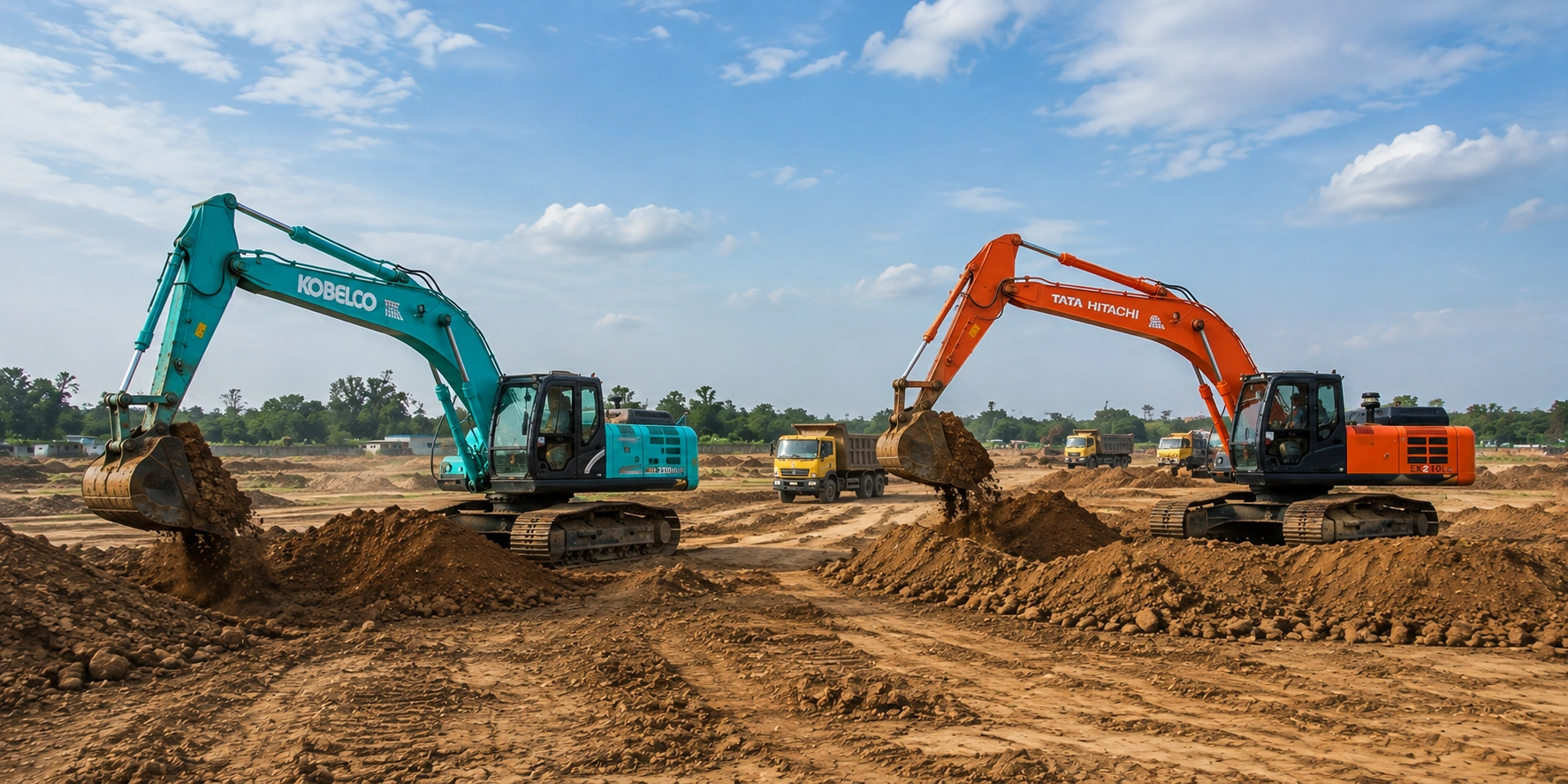
Excavators are among the most versatile machines used in construction, excavation, infrastructure, roadwork, land development, and site preparation. They are designed to handle tasks such as digging, trenching, earth removal, grading, demolition, and material handling. However, choosing the right excavator is not simply about selecting the biggest or most powerful machine available. The ideal excavator depends on the specific requirements of the project, site conditions, working space, excavation depth, material type, and expected workload.
Selecting an excavator that is too small can reduce productivity and increase project duration, while an unnecessarily large machine may create additional transportation, fuel, and operating costs. A properly selected excavator provides the right balance of power, capacity, manoeuvrability, stability, and efficiency.
For construction contractors and project owners, understanding the key factors involved in excavator selection can help make earthmoving operations more productive and cost-effective.
Understand Your Construction Project First
Before choosing an excavator, start by understanding the work that needs to be completed. The machine should be selected according to the job rather than simply based on availability or machine size.
Consider factors such as:
- Total excavation volume
- Required digging depth
- Required digging reach
- Type of soil or material
- Site accessibility
- Available working space
- Project duration
- Material loading and transportation requirements
- Terrain and ground conditions
- Required attachments
For example, a small residential foundation project may require a compact excavator, while road construction, commercial development, or large-scale earthmoving may require a medium or heavy-duty crawler excavator.
Choose the Right Excavator Size
Excavators are available in different size and weight categories. The correct size depends largely on the scale and nature of the project.
Mini Excavators
Mini excavators are suitable for smaller construction and excavation projects where access is limited. They are useful for residential construction, landscaping, utility trenching, drainage work, and other jobs where a larger machine may not be practical.
Their compact design allows them to operate in relatively restricted areas while providing the digging capabilities required for light and medium-duty applications.
Medium Excavators
Medium-sized excavators provide a useful balance between digging performance, operating capacity, reach, and manoeuvrability. They are commonly suitable for commercial construction, roadwork, drainage projects, site preparation, and general earthmoving.
They can handle larger workloads than mini excavators while remaining practical for many construction sites.
Large Excavators
Large excavators are designed for demanding earthmoving operations where high productivity and greater digging capability are required. They are generally more suitable for major infrastructure, large-scale excavation, quarrying, mining, and heavy construction work.
Using a large excavator for a small project, however, may not be economical because of higher transportation and operating requirements.
Consider the Type of Excavator
The type of undercarriage and overall configuration can make a major difference to machine performance.
Crawler Excavators
Crawler excavators use tracks and provide good stability on uneven, soft, or challenging ground. They are widely suited to construction sites where the machine needs to work on rough terrain or remain in one location for extended periods.
Wheeled Excavators
Wheeled excavators are designed for greater mobility and can be useful for roadwork, urban construction, drainage, and projects where the machine needs to move frequently across relatively firm surfaces.
Long-Reach Excavators
Long-reach excavators are designed for applications where additional reach is required. They can be useful for deep excavation, work around waterways, slope-related projects, and certain demolition applications.
The right configuration depends on the site and the specific working conditions rather than simply the machine’s overall capacity.
Check the Required Digging Depth
Digging depth is one of the most important specifications when selecting an excavator.
If the machine cannot reach the required depth efficiently, operators may need to reposition the equipment repeatedly or use alternative methods, reducing productivity.
Before selecting an excavator, determine:
- Maximum excavation depth
- Required trench depth
- Foundation depth
- Vertical digging requirements
- Required working reach
The excavator’s maximum digging depth should provide sufficient capacity for the actual project requirements rather than being selected based on a general estimate.
Evaluate Reach and Working Radius
Digging depth is only one part of an excavator’s working range. Reach is equally important, particularly when the machine needs to excavate, load trucks, or work from a specific position.
Consider the distance between the excavator and the excavation area, spoil pile, or truck-loading point.
A machine with suitable reach can complete more work without constantly repositioning itself, helping improve operational efficiency.
Consider Bucket Capacity
The bucket is responsible for moving excavated material, making bucket capacity an important factor in overall productivity.
A larger bucket can move more material per cycle, but it is not automatically the best choice. The bucket should match the machine’s hydraulic capability, soil conditions, material type, and project requirements.
Different bucket configurations may be used for:
- General excavation
- Trenching
- Grading
- Rock excavation
- Material handling
- Ditching
Choosing an appropriate bucket helps the excavator perform efficiently without placing unnecessary demands on the machine.
Think About the Soil and Ground Conditions
Soil conditions can significantly affect excavator performance.
Soft soil, loose earth, clay, gravel, and hard or rocky ground can require different equipment configurations and attachments. Track type, machine weight, bucket selection, and hydraulic performance should all be considered based on the ground conditions.
For harder materials, specialized attachments such as hydraulic breakers may be required instead of relying on a standard digging bucket.
Understanding the ground before equipment selection helps prevent productivity issues and unnecessary machine strain.
Check Site Access and Working Space
One of the most common mistakes when choosing heavy equipment is overlooking site access.
Before selecting an excavator, check:
- Entrance and gate width
- Available operating area
- Overhead clearance
- Nearby buildings or structures
- Turning space
- Underground utilities
- Distance from the excavation area to material storage
- Road and transportation access
A large excavator may offer excellent digging performance but may be unsuitable if it cannot safely enter or manoeuvre around the site.
For confined residential or urban locations, a compact excavator may be more practical. Open construction sites provide greater flexibility when selecting machine size.
Select the Right Attachments
One of the major advantages of excavators is their ability to work with different attachments.
Depending on the machine and hydraulic configuration, attachments can include:
- Digging buckets
- Grading buckets
- Hydraulic breakers
- Augers
- Grapples
- Rippers
- Specialized trenching attachments
Attachments allow the same excavator to perform different types of work, increasing its versatility. However, attachment compatibility, hydraulic flow, pressure, and machine weight should always be checked before use.
Consider Productivity and Project Timeline
The right excavator should be capable of completing the required workload within the planned project schedule.
If a project involves moving a large volume of earth, using a machine with insufficient bucket capacity or digging performance can result in longer cycle times and increased operating hours.
On the other hand, choosing a machine that is much larger than necessary can increase operating and transportation costs without providing meaningful benefits.
The goal is to find the right balance between machine capacity and project requirements.
Evaluate Fuel Efficiency and Operating Costs
The purchase or hiring price of an excavator is only one part of the total cost.
Other costs can include:
- Fuel consumption
- Operator costs
- Transportation
- Routine maintenance
- Repairs
- Attachments
- Downtime
A machine that performs efficiently and completes the required work in fewer operating hours may provide better overall value than a cheaper machine with lower productivity.
When comparing excavators, consider the total operating cost rather than looking only at the initial price.
Consider Hiring an Excavator
For contractors and businesses that do not require an excavator throughout the year, hiring equipment can be a practical option.
Excavator hiring can provide access to suitable machinery without the long-term financial commitment associated with purchasing and maintaining heavy equipment.
It can be particularly useful for:
- Short-term construction projects
- Excavation work
- Foundation preparation
- Roadwork
- Drainage projects
- Land development
- Site preparation
Working with an experienced earthmoving service provider can also make it easier to select the appropriate machine for the specific project.
Operator Experience Matters
Even the right excavator will not deliver its full potential without proper operation.
Experienced operators understand how to work with different soil conditions, excavation depths, attachments, and site restrictions. They can also operate the equipment more efficiently while following appropriate site safety practices.
When hiring an excavator service, consider both the condition of the machinery and the experience of the operators.
Don’t Choose an Excavator Based Only on Price
Price is important, but it should not be the only factor.
The cheapest excavator may not always be the most economical choice if it takes significantly longer to complete the work or is unsuitable for the site’s conditions.
Instead, compare:
- Machine capability
- Productivity
- Fuel efficiency
- Equipment condition
- Operator experience
- Availability
- Transportation requirements
- Maintenance support
- Overall project cost
A machine that is properly matched to the project can help reduce downtime and improve the overall efficiency of earthmoving operations.
Final Checklist Before Selecting an Excavator
Before finalizing an excavator for your project, make sure you have considered:
- What type of excavation work is required?
- How deep does the machine need to dig?
- How much material needs to be moved?
- What type of soil or material will be excavated?
- Is the site open or restricted?
- What type of excavator is suitable for the terrain?
- What bucket capacity is appropriate?
- Are additional attachments required?
- How much working space is available?
- How will the equipment reach the site?
- What is the expected project duration?
- What are the total operating costs?
- Is an experienced operator available?
Answering these questions before selecting the equipment can help prevent costly equipment mismatches and unnecessary project delays.
Conclusion
Choosing the right earthmoving excavator is an important decision that can directly influence construction productivity, project timelines, operating costs, and site efficiency. The best excavator is not necessarily the largest machine available—it is the machine that matches the actual requirements of the job.
Project scope, excavation depth, machine size, terrain, site access, bucket capacity, attachments, operating costs, and operator experience should all be evaluated before making a decision.
For construction contractors, builders, developers, and infrastructure companies, working with an experienced earthmoving service provider can make the equipment selection process easier and help ensure that the right machine is used for the right application.
Kasturi Earthmovers can support construction and earthmoving requirements with suitable equipment and professional excavation solutions, helping projects move forward with greater efficiency and reliability.